In the lush tropical landscapes of Southeast Asia, a unique sweetener has been crafted for centuries, carrying with it the whispers of tradition and the soul of its terroir. Gula Melaka, often referred to as palm sugar or coconut sugar, stands as a testament to the region's rich culinary heritage. Unlike its more ubiquitous counterpart, ordinary brown sugar, which is derived from sugarcane and widely produced across the globe, Gula Melaka is meticulously made from the sap of the flower buds of the coconut palm. This fundamental difference in origin is just the beginning of a fascinating divergence in flavor, aroma, texture, and cultural significance that sets these two sweeteners worlds apart.
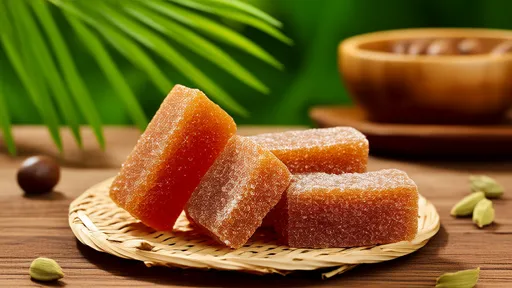
The journey of Gula Melaka begins high up in the coconut palms, where tappers skillfully collect the sweet, watery sap. This liquid is then slowly simmered in large woks over open fires until it reduces and thickens, eventually being poured into bamboo molds where it solidifies into the characteristic cylindrical blocks. This traditional method, largely unchanged for generations, imparts a depth of flavor that is impossible to replicate in industrial settings. The gentle caramelization over wood fire introduces subtle smoky undertones, while the natural minerals from the palm sap and the bamboo molds contribute to its complex profile. The result is a sugar that is not merely sweet but tells a story of sun, soil, and skilled hands.
In stark contrast, the production of ordinary brown sugar is a tale of modern industrialization. Most commercial brown sugar is not a minimally processed product but is instead created by adding molasses back into refined white sugar. This process allows for strict control over color and moisture content but often at the expense of nuance and depth. The molasses, a byproduct of sugarcane refinement, does provide some flavor and color, but the character is generally one-dimensional compared to its artisanal Southeast Asian cousin. The flavor is straightforwardly sweet with a familiar, robust caramel note, but it lacks the layered complexity and the faint earthy, floral whispers that define Gula Melaka.
When you hold a piece of Gula Melaka, its texture speaks volumes. It is typically firm yet possesses a certain fudge-like density. It can be grated or shaved, and when it melts, it does so with a rich, unctuous quality. Ordinary brown sugar, especially the soft, free-flowing varieties found in supermarkets, has a moist, sandy texture designed for convenience. It dissolves quickly and uniformly, making it a practical choice for baking where consistent texture is key. However, this very practicality underscores its utilitarian nature—it is a tool for sweetness, not an ingredient to be savored for its own unique properties.
The most captivating difference, however, lies in the symphony of flavors. Gula Melaka offers a far more sophisticated and less aggressive sweetness. Its taste is a harmonious blend of deep caramel, reminiscent of toffee or butterscotch, intertwined with faint hints of smokiness from the traditional cooking process. More remarkably, there are often elusive notes of vanilla, coconut, and even a slight floral aroma that can elevate a simple dessert into something extraordinary. It is a sweetener that enhances other ingredients without overwhelming them, adding a rounded, mellow depth. A classic Malaysian dessert like chendol or a Thai sticky rice with mango relies on Gula Melaka not just for sweetness, but for its distinctive, irreplaceable flavor that forms the soul of the dish.
Ordinary brown sugar, on the other hand, presents a much bolder and simpler profile. Its flavor is dominated by a strong, straightforward caramel and molasses taste. It is intensely sweet, often with a slightly bitter edge from the molasses. While it is excellent for providing a rich, dark sweetness in things like gingerbread, barbecue sauces, or certain cookies, its flavor is less nuanced. It acts as a loud soloist rather than part of an orchestra, making its presence known in a direct and unmistakable way. It doesn’t introduce secondary flavors of smoke, earth, or flower; its purpose is to sweeten and provide a familiar caramel note, which it does efficiently and effectively.
This divergence extends into the culinary applications and cultural contexts of these sugars. In Southeast Asia, Gula Melaka is not just an ingredient; it is woven into the fabric of social and cultural life. It is a cornerstone of celebratory feasts, religious offerings, and everyday comfort foods. Its use is a practice in balance and subtlety, meant to complement the complex spice pastes, creamy coconut milk, and fragrant pandan leaves that define the region's cuisine. It is an intrinsic part of the identity of dishes, to the point where substituting it with ordinary brown sugar would be immediately noticeable and considered a culinary compromise, stripping the dish of its authentic character and soul.
Conversely, brown sugar is a workhorse of Western and globalized baking and cooking. Its robust flavor stands up well to strong spices like cinnamon, nutmeg, and clove, and its hygroscopic nature helps create moist, tender baked goods. It is a symbol of homey, comforting classics like chocolate chip cookies, brown sugar glaze for ham, or oatmeal. Its value lies in its consistency, availability, and powerful flavor impact, making it an indispensable pantry staple in many parts of the world. However, it does not carry the same cultural weight or artisanal narrative; it is a commodity, valued for its function rather than its origin story.
Ultimately, the choice between Gula Melaka and ordinary brown sugar is rarely about mere substitution. It is a choice between two different philosophies of sweetness. One is a traditional, artisanal product whose flavor is a direct expression of its natural source and centuries-old craftsmanship. It offers a complex, nuanced sweetness that speaks of a specific place and tradition. The other is a modern, consistent, and powerful sweetener designed for reliability and mass production. While both have their rightful place in the kitchen, they are not interchangeable. To use Gula Melaka is to invite a taste of Southeast Asian sunshine and heritage into your cooking, a flavor that is as rich and complex as the culture from which it comes.
By /Aug 20, 2025
By /Aug 20, 2025
By /Aug 20, 2025
By /Aug 20, 2025
By /Aug 20, 2025
By /Aug 20, 2025
By /Aug 20, 2025
By /Aug 20, 2025
By /Aug 20, 2025
By /Aug 20, 2025
By /Aug 20, 2025
By /Aug 20, 2025
By /Aug 20, 2025
By /Aug 20, 2025
By /Aug 20, 2025
By /Aug 20, 2025
By /Aug 20, 2025

By /Aug 20, 2025
By /Aug 20, 2025
By /Aug 20, 2025
